A lasting line moved off solvent onto a waterborne to get under a VOC limit, and the uppers started creeping open at the toe while the operator was still pressing the next pair. Nobody blamed the oven at first. The bond had no green tack; nothing held the two faces together long enough for the water to leave and the heat to do its work. That is the thing about converting a footwear adhesive line to a waterborne, heat-activated polyurethane: the cured strength comes easily, but the two dials that decide whether the line actually runs are the grab the adhesive has before it sets and the temperature and time it is activated at. Get both right and a waterborne seam holds harder than the polychloroprene it replaced. Get them wrong and it holds nothing at all.
What green tack is, and why it is a process setting
Green tack is the grip of the wet, uncured film, the force that keeps a lasted seam closed long enough for the water to flash off and the bond to set. It is not bond strength, and confusing the two is where most conversions stall. On a solvent contact cement the film is faintly tacky when the parts meet, so the seam holds on contact and the operator moves on. A waterborne dispersion is different: the particle only becomes a continuous film after the water has left it, so the tack you can rely on has to be present before that happens and survive long enough to assemble.
Three levers set it. Molecular weight and the soft-segment chemistry decide how "sticky" the wet film is at all. Solids content decides how much of it is left behind to grip after evaporation; a 50% solids spray grade stands up in a seam where a 30% one collapses. And open time decides how long you have to bring the two faces together before the film stops being able to wet the next surface. If a low-energy upper is springing back before you press, that is an open-time and solids problem, not a curing-oven problem, and turning up the heat will not fix it. Our piece on peeling and adhesion failure covers the surface-energy side of the same question.
Activation temperature and dwell: the second dial
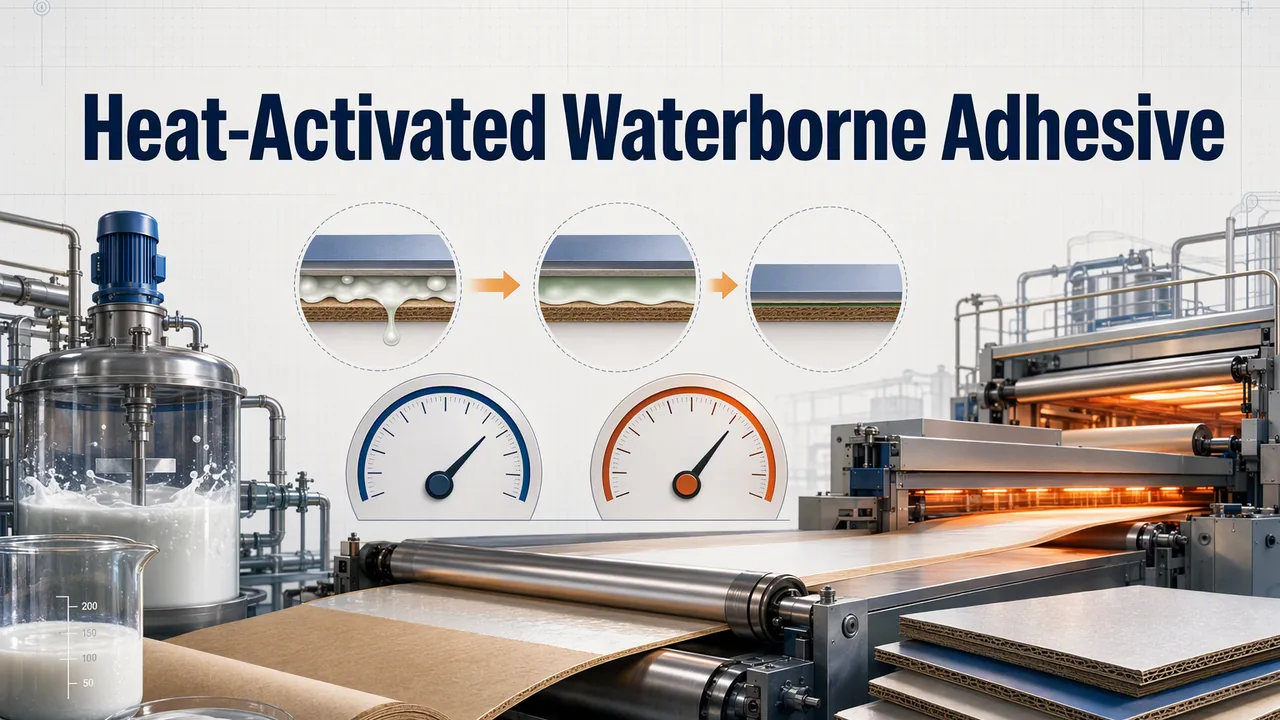
Heat activation is where the bond is actually made. These dispersions are built around hard segments that have to be driven past their softening point so the chains can move, then given time to reorganise and crystallise into the domains that carry the strength. Miss the temperature and nothing reorganises. Hit it but rush the dwell and it reorganises only at the surface. Both read as a bond that is fine when you test it warm and opens when it cools.
The window is narrow and grade-specific. Our brush-applied grade and the spray YT-507 both activate at a modest 50–55 °C, close to what a hot upper already carries, so they are forgiving on a manual lasting station. A high-activation grade like YT-503 wants 100–110 °C and rewards an automated press that can hold that temperature and a real dwell. The mistake we see most is setting the oven for the lowest grade on the line and running every upper through it, then fighting the high-activation grades all shift.
| Grade | Activation | Solids | Tuned for |
|---|---|---|---|
| YT-507 | 50–55 °C | 50 ± 2% | Fast lines and spray; strong initial tack |
| YT-502 | 50–55 °C | 40% | Brush-on uppers; forgiving dwell |
| YT-503 | 100–110 °C | 39 ± 1% | Hot service; anti-blocking on the press |
Dwell is the half everyone forgets. A rule of thumb we run in the lab: enough time at temperature for the adhesive to re-wet the substrate, which on a dense embossed leather is longer than on a fabric. When a seam fails and the activation temperature on the log was correct, look at dwell and at whether the parts were pressed warm or allowed to cool before the press closed.
Converting a solvent line without losing the seam
The conversion itself is a sequence, and it fails when you change two dials at once and cannot tell which one moved.
- Pick the grade by its activation window, then by its green tack. Match 50–55 °C grades to manual stations and 100–110 °C grades to a press you can trust. Everything else follows from that.
- Fix the flash-off before you touch tackifiers. Raise solids or improve air movement at the assembly table so the film is carrying water out fast enough to reach handling strength, and only then judge the grab.
- Time the assembly to the open window. Bring the faces together while the film still wets, not after it has skinned. If the line cannot keep up, you chose too fast-drying a grade, not too weak an adhesive.
- Do not thin your way out of a tack problem. Adding water lowers solids and green tack together; you gain flow and lose the very grip you were chasing. If viscosity is wrong, ask for a different grade, as the trade-offs in our blocking and cold-tack note apply to adhesives too.
- Log press temperature and dwell every lot, and pull one seam wet and one dry after twenty-four hours rather than judging the bond warm and fresh.
Where a waterborne still loses, and what that costs you
Be honest about the target. A waterborne heat-activated grade will not give you the instant, twenty-second grab of a solvent polychloroprene, and no amount of formulation makes it do that. You buy the strength back with dwell and heat, and you pay for it in line discipline: an operator who presses cold, or an oven that drifts ten degrees low, costs you seams the solvent line would have survived. On very oily or deeply embossed leather the 50–55 °C grades may not wet the substrate well enough to develop their rated tack, and the high-activation grade earns its energy cost there.
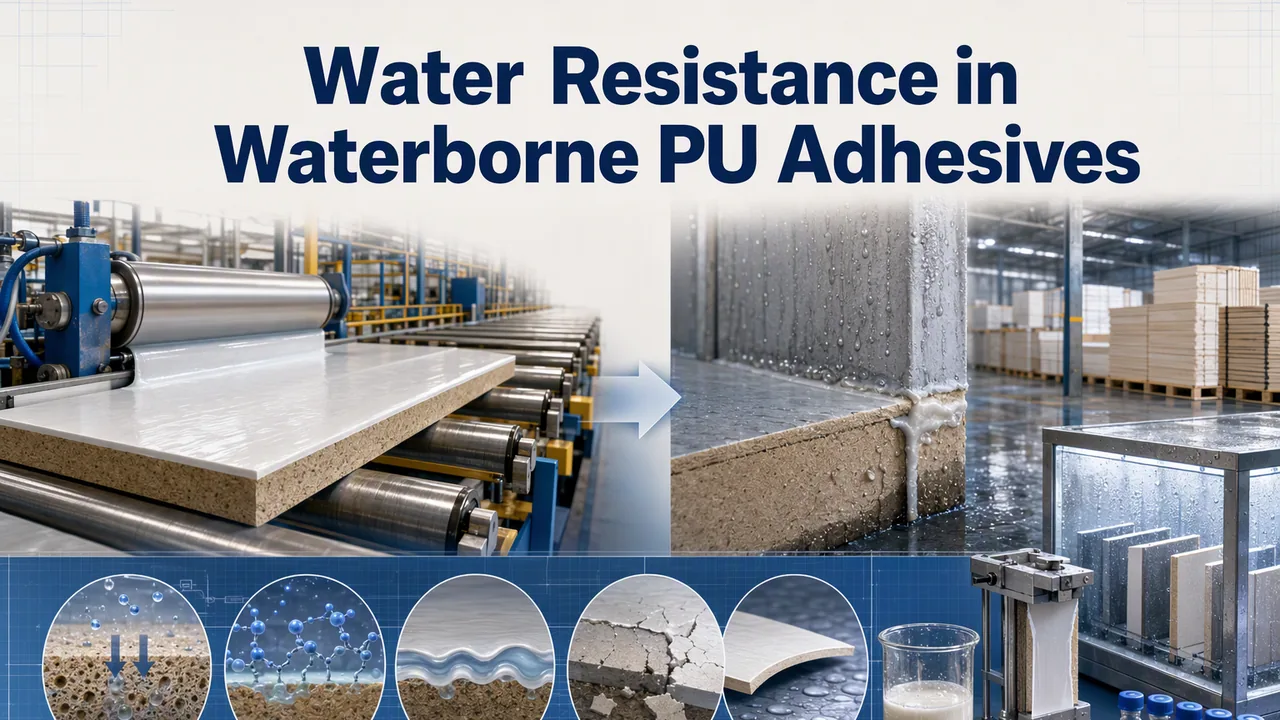
Where the shoe will see real heat or humidity after it leaves the line, the same crystallisation that gives you green-tack-versus-dwell control also sets the wet strength; the grades above are the ones we point at in our water-resistance breakdown, and the full numbers are on the YT-507 TDS. The rest of the footwear and lamination range sits on the adhesive grades page and the adhesives application page.
Tune the two dials in the order above and a waterborne lasting line is repeatable in a way solvent never was. If a seam is opening and you cannot tell whether it is tack, temperature or dwell, send us the oven and press settings you ran and we will read them with you at the application lab.
Frequently asked questions
Why do my uppers creep open during lasting on a waterborne adhesive?
Almost always green tack, not cure. The film has lost the ability to wet the mating surface before the seam is pressed, so the parts spring apart while the water is still leaving. Raise the flash-off rate and assemble inside the open window first; a higher-solids, high-tack spray grade such as YT-507 is usually the fix before any oven change is.
What activation temperature should a waterborne heat-activated shoe adhesive run at?
It depends on the grade, and the grade has to match your equipment. YT-502 and YT-507 activate at 50–55 °C and suit manual stations; YT-503 wants 100–110 °C and a press that can hold it with a real dwell. Set the oven for the grade you are running, not for the lowest one on site.
Should I add water to slow the set or fix a stringy film?
No. Thinning lowers solids and green tack together, so you cure the stringiness and cause an open seam. Viscosity that will not spray or brush is a grade-selection problem, not a water problem; ask for a different grade and keep the water out of the mixing tank.